Weathering the Extremes
Stadium canopies exist on the front lines of microclimate engineering. Beyond simply keeping rain off spectators, modern roof structures actively manage thermal buildup, aerodynamic pressure, and snow accumulation. Using computational fluid dynamics (CFD), structural engineers contour roofs to manipulate nature itself.
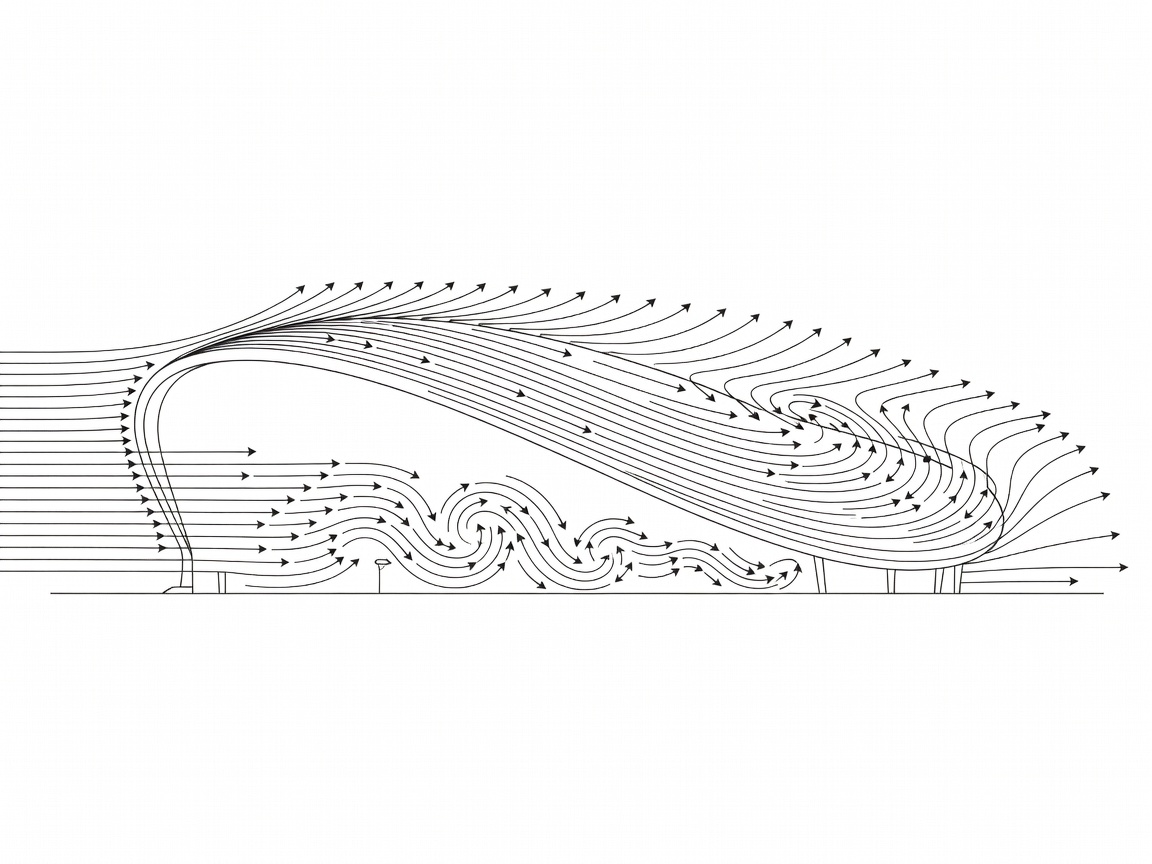
Aerodynamics and Uplift
A canopy is essentially a massive airfoil. High winds passing over the curved surface of a stadium create severe low-pressure zones above the membrane, generating massive upward suction. Engineers combat uplift by meticulously shaping the roof's leading edges to break up laminar flow, reducing the sheer vacuum forces that threaten to tear membranes from their mounts.
Passive Ventilation Systems
Eighty thousand spectators generate immense thermal energy. Without proper venting, a closed or semi-closed stadium becomes a greenhouse. Roofs are designed with precise geometric gaps—often overlapping tiered layers—that utilize natural convection. As hot air rises towards the apex of the canopy, it pulls cooler air in through the lower concourses, creating a natural thermal draft.
"The stadium roof breathes. It channels the wind to extract heat, turning an architectural hazard into an environmental asset."
Snow Loads and Melt Mechanics
In northern latitudes, snow accumulation presents a catastrophic risk. A deep layer of wet snow can add thousands of tonnes of dead weight to a span. ETFE cushions and PTFE membranes are exceptionally smooth, allowing snow to slide off before accumulating dangerously. Furthermore, the inherent thermal conductivity of the materials can be leveraged alongside internal heating systems to actively melt ice at critical structural nodes.