Defying Gravity with Steel
Tension architecture fundamentally rewrites the rules of spanning immense voids. Rather than relying on the heavy, rigid bending resistance of traditional steel trusses, tension roofs utilize networks of high-strength cables. By pretensioning the system, engineers create a highly efficient load-bearing matrix capable of supporting protective membranes over colossal areas.

Compression Rings
The crucial counterbalance to the inward pull of a cable-net roof. Massive concrete or steel ring beams wrap the outer perimeter, absorbing the immense horizontal forces.
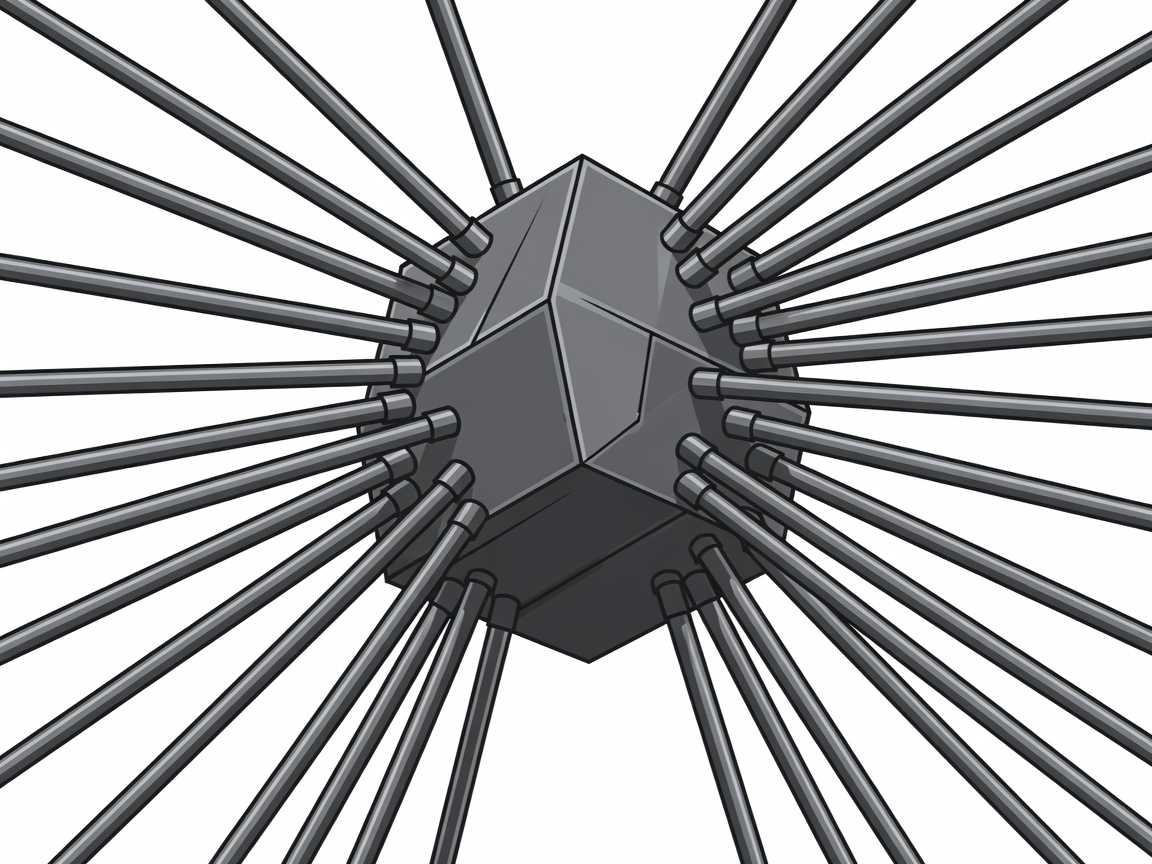
Radial Nodes
Complex cast-steel nodes act as junctions where radial and circumferential cables meet, locking the geometry of the roof into its final form.
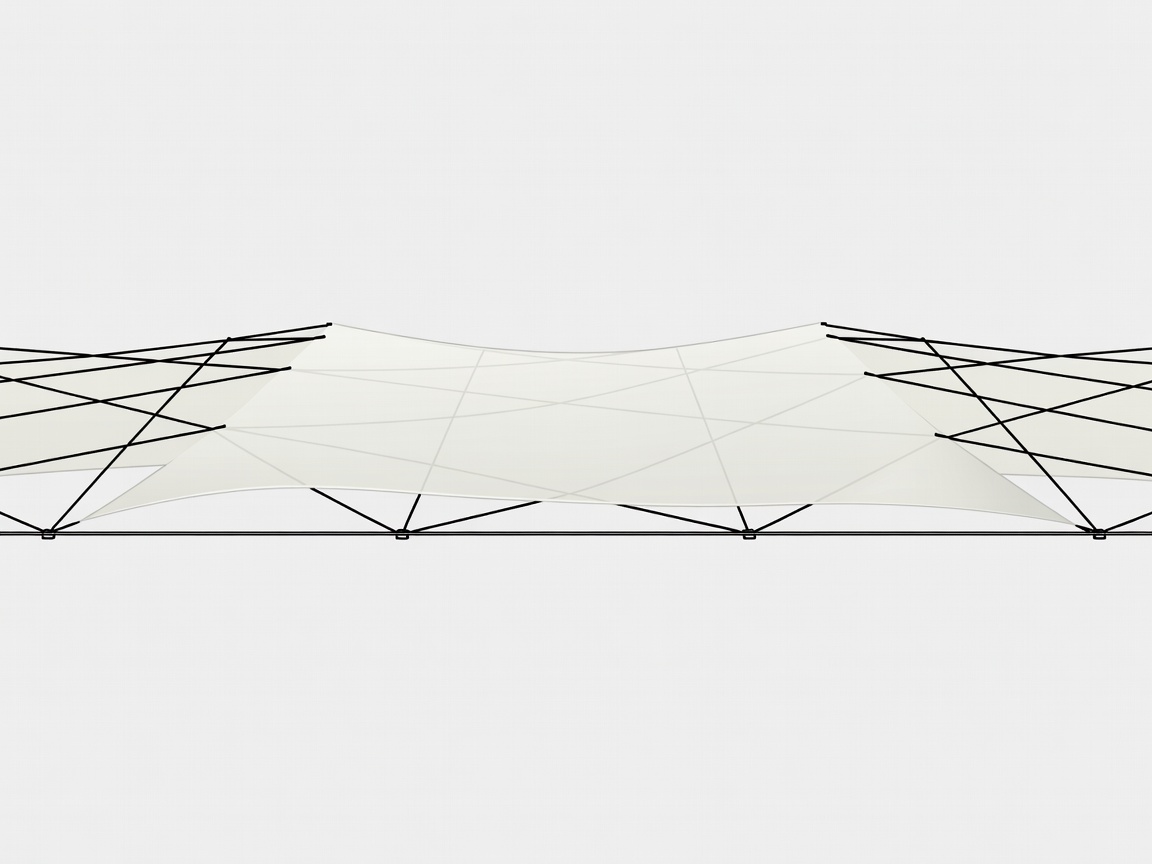
Membrane Cladding
Tension structures are clad in lightweight architectural fabrics. These act not merely as a cover, but as active structural elements transferring wind and snow loads back into the cables.
The Physics of Pretension
In a tensile structure, a cable that goes slack is structurally useless. To prevent this, the entire system is artificially stressed (pretensioned) during construction. Hydraulic jacks pull the primary cables tight against the compression ring. This initial force ensures that even under maximum downward snow loads or upward wind suction, every cable remains taut.
"A tension roof is akin to a finely tuned instrument—every strand perfectly stressed to maintain equilibrium across the entire span."
Weight Efficiency and Cost
The primary advantage of tension roofs over traditional space frames is their profound reduction in dead weight. A cable-net roof might require a fraction of the structural steel tonnage of a rigid truss design. This lightweight approach cascades downwards, reducing the foundation requirements and ultimately the total carbon footprint of the stadium construction.